On the evening of June 19, 2026, two groups of hikers called for help on Mount Lafayette in New Hampshire. Cold rain, poor visibility and wet clothing accompanied an overnight rescue. The assistance brought by hut staff included shelter and dry clothing. For trip preparation, the useful question is concrete: when you stop and need warmth, will the spare clothing in your pack still be dry?
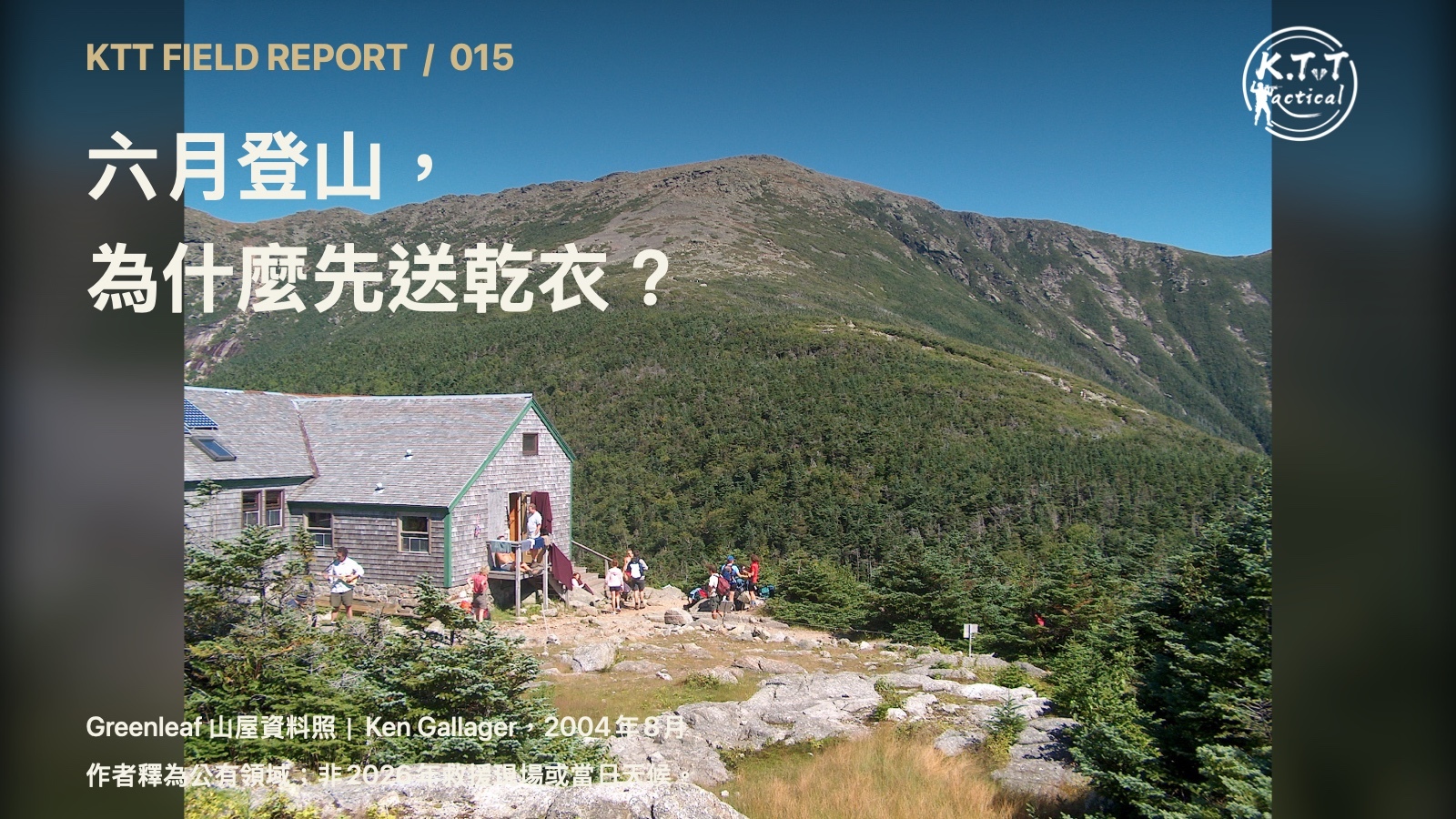
Greenleaf Hut and Mount Lafayette, photographed by Ken Gallager in August 2004 and released into the public domain. This location photograph does not show the June 2026 rescue or its weather.
What the hut crew brought
NH Fish and Game's June 22 account says the first call came at about 8 p.m. on June 19. The hikers reported poor visibility, no lights and no warm clothing. Staff from AMC's Greenleaf Hut found one hiker unresponsive and another still alert but cold and wet. They provided shelter and dry clothing and requested additional help for a carry-out.
Rescuers reached the hiker at 1:10 a.m. and carried him to the hut, arriving at 2:55 a.m. After further care, the group reached the trailhead at 7:55 a.m.; an ambulance took him to hospital. All times are local to the incident. A second group called while the first rescue was under way and received lights, dry clothing and assistance downhill.
KTT's timeline of reported milestones, not a route map or medical protocol.
Plan separately for rain and warmth
Rocky Mountain National Park's safety guidance describes hypothermia as a year-round risk. It recommends layers suited to expected conditions, warm accessories even in summer, and a waterproof or rainproof layer. This is general guidance from a separate agency, not a description of what these hikers wore.
KTT's preparation takeaway is to ask two questions: have you planned for rain, and will your spare insulation remain dry until needed? Counting garments alone does not establish their condition.
KTT Tactical Observation: what can you change into?
Imagine packing for a mountain walk where rain is possible. Clothing worn while moving may encounter rain or perspiration. If the spare warm layer becomes wet as well, you lose a dry option you intended to keep in reserve.
Identify the clothing intended for active use and the layer kept as a spare, then consider whether its storage puts it alongside wet equipment. This is KTT's planning example, not the hikers' packing method or a waterproof-performance claim for a jacket or bag. Match clothing and storage to the route, conditions and equipment instructions.
What the account cannot establish
NHPR reported the incident on June 20, also attributing its incident information to Fish and Game. It is not a separate field measurement. The public account does not provide complete temperature readings, garment models or treatment details. Recovery cannot be attributed to dry clothing or any single item. Seek professional emergency help for suspected hypothermia; this article concerns preparation and does not replace rescue instructions.
Where would you pack a spare warm layer so it remains dry until you need it?