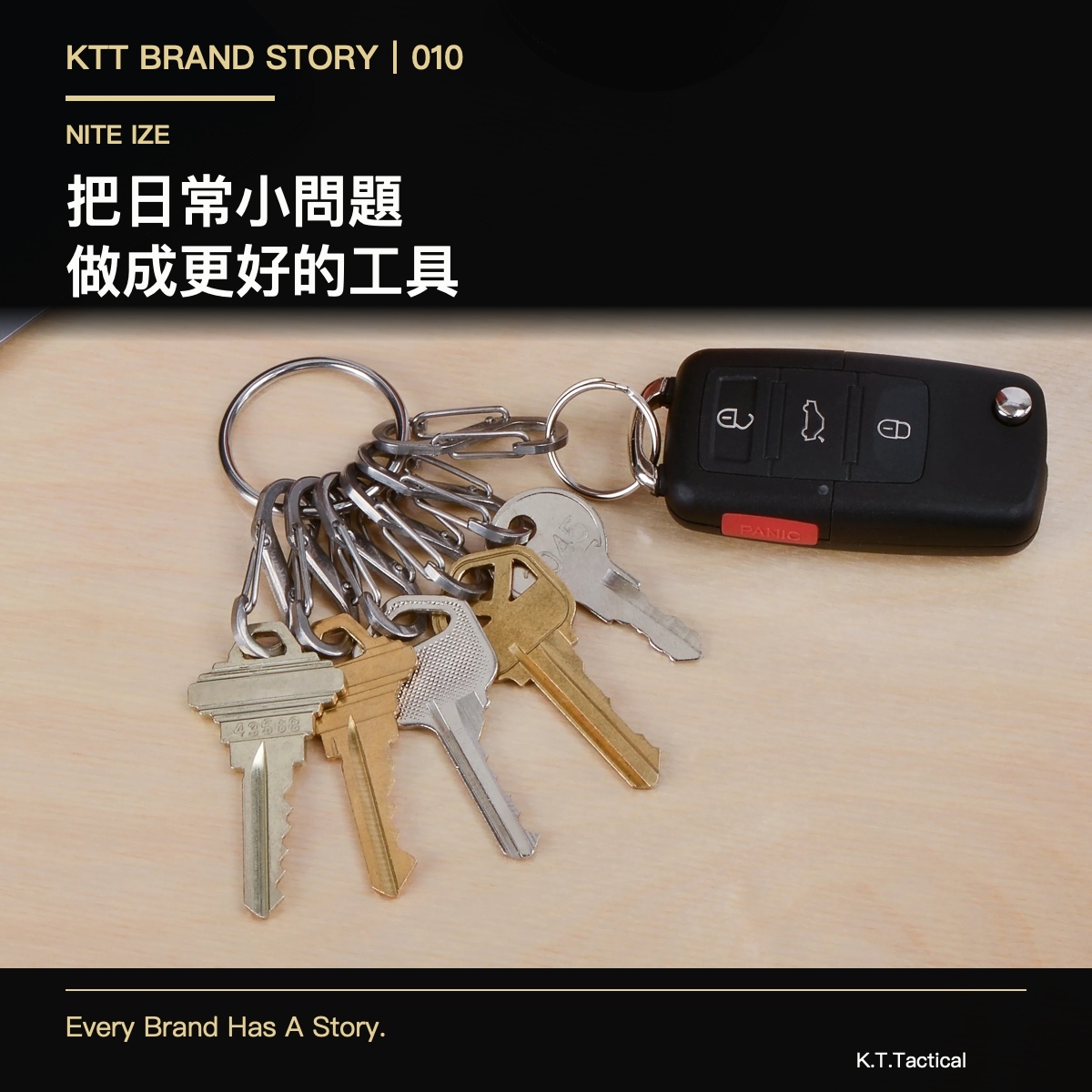
Cover photo material: K.T.Tactical product materials; not a record of testing for this article.
Why dismantle a whole key ring to lend one key?
You are leaving home and want to take just one key. Or someone needs to borrow the car key, and separating it interrupts whatever you were doing. Neither task is particularly difficult. Repeated often enough, however, it raises a useful question: do we need more tools, or small tools that better match our habits?
This is a practical way to approach Nite Ize. Its beginnings and the KeyRing Steel S-Biner offer an opportunity to examine everyday design, without turning a brand story into a contest of specifications.
Where the story begins
According to Nite Ize's official introduction, the company began in Colorado in 1989. In its 2024 anniversary announcement, founder Rick Case recalls starting the business as a student. A winter climb inspired him to make a handheld flashlight wearable: the idea became his first flashlight-holder headband.
The interesting part is the scale of the problem. The idea changed the relationship between an existing tool and its user. That is a design lesson, not evidence that every later product must perform well. Starting with a specific inconvenience helps explain what a proposed improvement is actually for.
Image source: K.T.Tactical product materials. Product image, not a record of testing for this article.
From one bundle to individually accessible keys
The official KeyRing Steel S-Biner page describes a stainless steel ring with removable S-Biners for attaching, changing and sharing individual keys. This article discusses that arrangement, not the mechanisms of other locking versions.
Keys do not always travel together. Some are used daily, others occasionally, and some pass between family members. Thinking in smaller, separable units changes the organizing question from “How do I carry the whole bunch?” to “Which key belongs in this particular trip?”
That does not mean everyone needs a different key ring. If yours rarely comes apart, your current arrangement may already work. If you frequently lend or separate keys, individual access becomes more relevant. A feature earns its place through a recurring need.
KTT Tactical Observation
The following is KTT's design analysis, not a product test. We suggest looking at three ordinary questions.
1. Which action becomes easier?
Make “convenient” specific. Is the difficulty removing one key, handing it over, or putting it back? Identifying the troublesome step helps distinguish a useful change from an appealing new object.
2. Where does the item return?
Being able to separate things does not automatically create an organizing habit. A consistent place to return keys and a shared understanding of handoffs still matter. Hardware offers options; people establish routines around them.
3. Keep the tool's role proportionate
A key organizer does not need a more dramatic mission to be useful. Look beyond material names to handling, bulk, the shape of your existing keys and whether you would actually keep using the arrangement. Small improvements should fit the day you already have.
Limits and use notes
This article draws on official brand history and the specified product page. These are not independent performance evaluations. We have not tested durability, closures or everyday use, and make no loss-prevention, safety, certification or suitability guarantees. Check the exact product, package and manufacturer instructions in your possession.
Every Brand Has A Story.
The thread connecting the headband and individual key access is straightforward: understand a small problem before deciding what a tool should change. Every Piece of Gear Has A Reason.
Which would you most like to improve: removing a single key, lending one to family, or returning it afterward?