If a device is ready to fly, does that mean it should? Around an emergency response, professional judgment sometimes means leaving working space clear rather than adding another camera.
This historical case review examines the 9 January 2025 drone collision involving a firefighting aircraft at the Palisades Fire in California. Its central lesson is simple: equipment capability does not replace mission authorization and airspace coordination. This is not a report of a new incident.
Confirmed facts
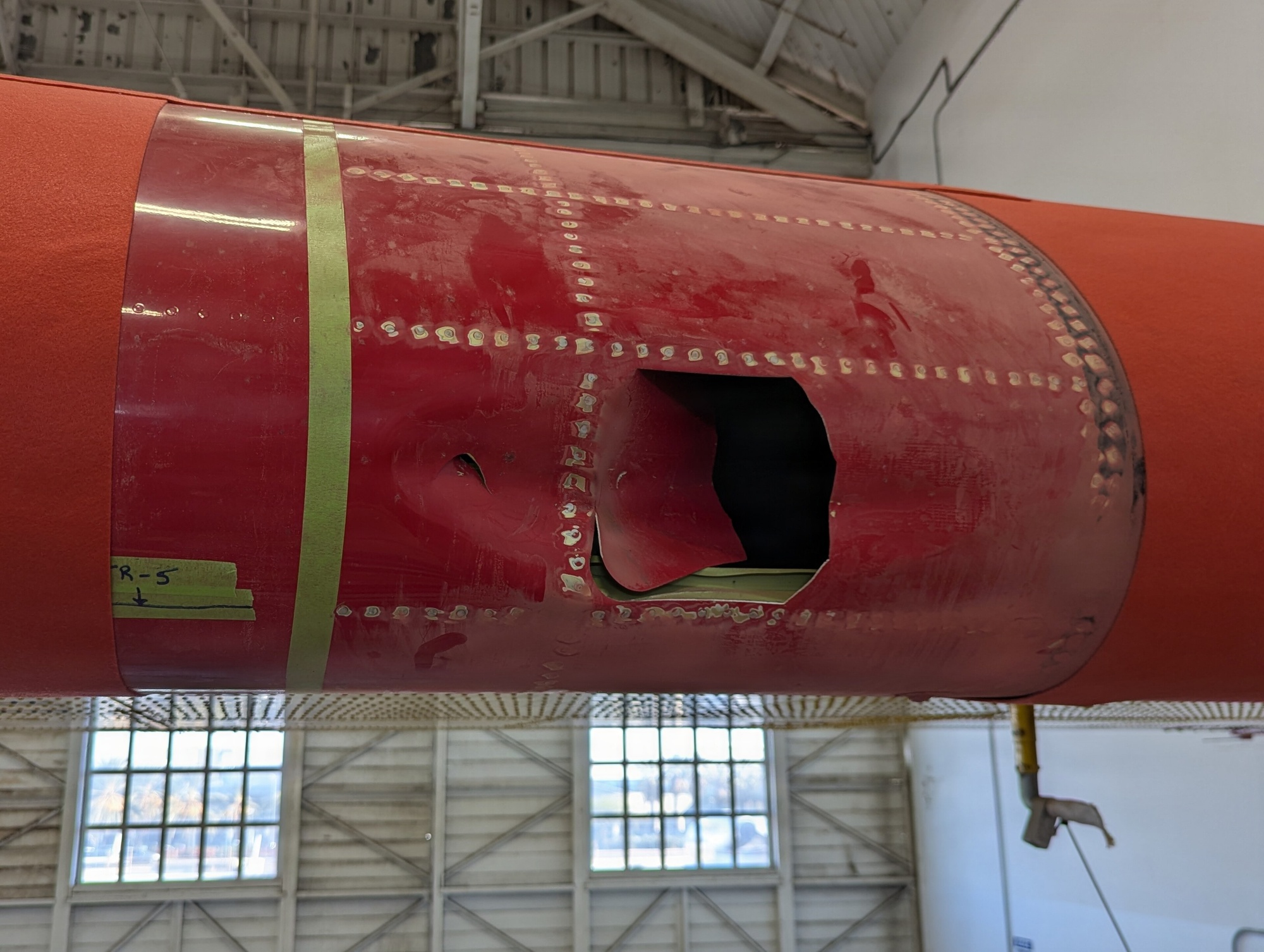
A U.S. Department of Justice release dated 31 January 2025 records an unauthorized drone collision with a Quebec Super Scooper working on the Palisades Fire on 9 January. The aircraft's left wing was damaged, and it was removed from service for repairs after landing. Temporary flight restrictions were in effect. [1]
ABC News reported the same incident date and damage, confirmed a safe landing, and covered the subsequent briefing. The core accounts agree, although their judicial reporting partly draws on the same case record; these are not two independent accident investigations. This article does not assess personal motives or current judicial outcomes. [2]
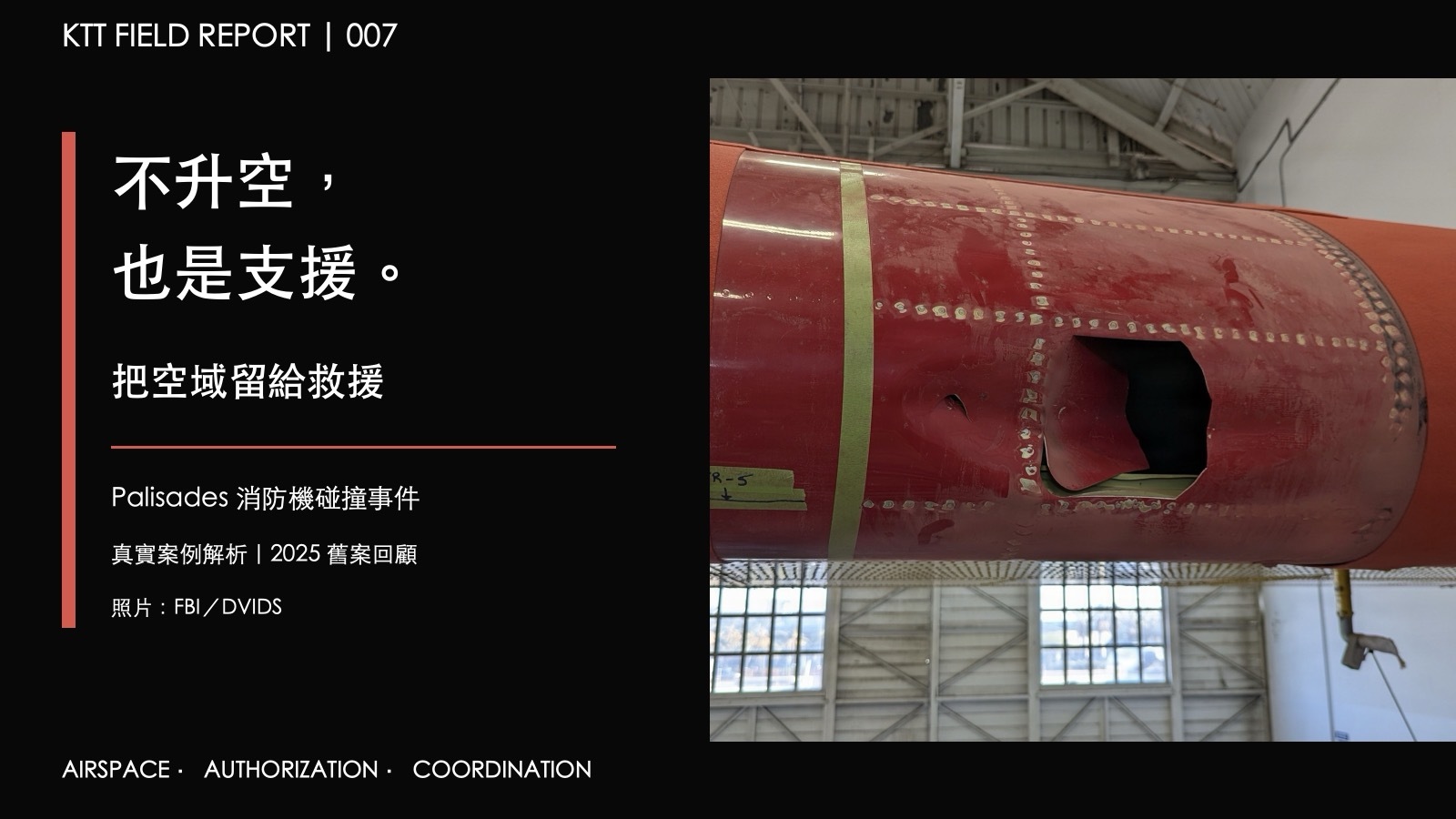
FBI photo, dated 9 January 2025; published by the U.S. Forest Service via DVIDS on 24 April 2026. It shows damage after the incident, not the collision itself. Original image record.
Context
Aerial firefighting depends on coordinated movements, not an aircraft operating alone. A 2026 U.S. Forest Service feature interviews a lead-plane pilot and an air tactical supervisor about that workload. Unauthorized drone activity can interrupt air operations for safety reasons even without a collision. [3]
The FAA explains that Temporary Flight Restrictions limit unauthorized aircraft activity, including drones, within a defined area and period. Holding a pilot qualification and obtaining permission for a particular operational airspace are separate considerations. Properly authorized and coordinated drones can support disaster response; the distinction is not simply between crewed and uncrewed aircraft. [4]
KTT Tactical Observation
1. Separate capability from assignment
The following is KTT's analysis, not an inference about an individual's motives. Product discussions often begin with endurance, weight or image quality. Mission discussions should begin elsewhere: who needs the information, who is assigned to obtain it, and who will receive it? Extra footage is not automatically useful support when those responsibilities are unclear.
2. Define non-use as a valid outcome
Preparation lists tend to describe what to bring and what to do. They should also describe when equipment stays inactive. Agreeing on those conditions beforehand gives team members a legitimate alternative to feeling that every available device must be used. This is a planning principle drawn from the case, not a substitute for incident command.
3. Include boundaries in procurement and training
For suppliers, procurement teams and team leaders, handing over equipment is only the beginning. Mission authority, information handover and stop conditions deserve space in user briefings. A clear explanation of when not to use a device may be more relevant to the task than another feature. This is KTT's selection perspective, not evidence that a specific product or training course delivers a proven outcome.
Limits of the analysis
We do not have the complete flight or incident-management records and cannot quantify any effect of this collision on fire growth, property damage or casualties. Nor does the case establish that every unauthorized flight results in a collision. Authorized response operations must be distinguished from uncoordinated intervention.
This is a review of a U.S. historical case and public safety information, not jurisdiction-specific legal advice or flight instruction. Follow current local rules, restriction notices and the responsible authorities. No product recommendation, official endorsement or performance guarantee is implied.
This week's discussion
Which item would you put first on a team's equipment-use briefing?
A — Who is authorized to assign the task?
B — Who receives the information, and how is it handed over?
C — Under which conditions does the equipment remain inactive?