閱讀繁體中文版
If sensors can see dozens—or one hundred—drones at the same time, does that mean the defensive network is ready to deal with them?
The U.S. Army's recent Scarlet Dragon 26-3 exercise placed large drone swarms, legacy air-defense systems, new sensors, electronic warfare, artificial intelligence and command-and-control tools in the same field environment. The central lesson is not a published score for any single product. It is that counter-UAS performance depends on turning many observations into a shared, actionable picture while assigning limited attention and effects under time pressure.
Confirmed facts: the exercise tested integration, not a product ranking
XVIII Airborne Corps Public Affairs published its account on September 21, 2026. Scarlet Dragon 26-3 was held at Fort Bragg, North Carolina, from September 11 to 17. The event combined Soldiers, military systems, industry partners, AI tools and resilient data pathways.
The Army reported scenarios involving 50- and 100-drone swarms layered with other aerial threat profiles. The objective was to stress sensor networks, software, command-and-control and air-defense crews. Radar, electronic warfare, passive sensing, autonomous systems and defensive fires were evaluated as parts of a larger workflow.
Independent reporting by Inside Defense on the same date also described a 100-drone swarm, AH-64 helicopters, AI and sensor-data sharing. These sources support the conclusion that integration was a central theme. They do not provide complete detection, interception, false-alarm, rules-of-engagement or vendor-comparison data.
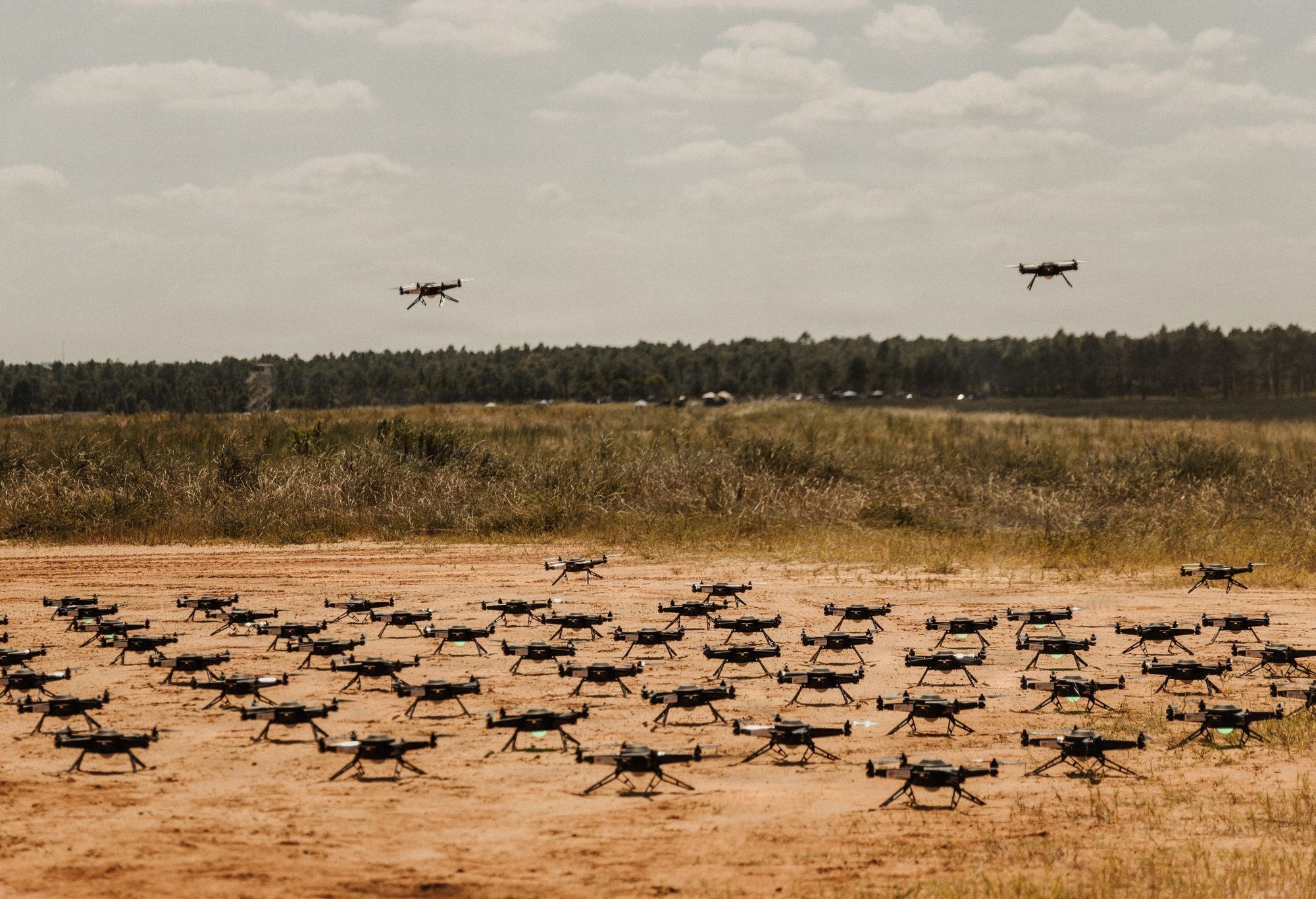
Scarlet Dragon 26-3 at Fort Bragg, September 15, 2026. U.S. Army photo by Pfc. Iliana Lopez via DVIDS, public domain. The image illustrates the exercise environment; it does not reveal unpublished test results.
Context: one hundred tracks create more than one hundred tasks
A sensor can report a contact, but the operational chain must answer additional questions. Are two sensors reporting the same aircraft? Which track represents a decoy, a parent vehicle or a higher-priority threat? Which node maintains the shared picture when data is delayed, disconnected or formatted differently? How does the force avoid assigning two effectors to one target while another target disappears during handoff?
The U.S. Department of Defense counter-small UAS strategy emphasizes layered defense, common information-sharing architecture, standardized interfaces and operationally relevant testing. Those principles matter because placing a radar, jammer and interceptor near each other does not automatically create a coherent system. Data fusion, identification, authorization, command relationships and reporting remain necessary.
KTT Tactical Observation
1. Turn detection into a stable common picture
Radar, radio-frequency, acoustic and electro-optical sensors have different strengths and blind spots. When the number of targets rises quickly, duplicate tracks, conflicting classifications and latency become more consequential. The useful question is not how many symbols appear on a screen, but whether the network can maintain target identity and deliver sufficiently trustworthy information to the people who must act.
2. Prioritization is resource allocation, not identification alone
Detecting every aircraft does not mean every aircraft should receive the same response. Interceptors, spectrum, operator attention and reaction time are limited. Direction, speed, indications of payload, group behavior and the assets being protected all influence priority. Automation can assist, but the public material does not establish that AI can replace human judgment across all conditions. Data quality, operator comprehension and intervention boundaries remain part of the design.
3. Layered defenses can also interfere with one another
Electronic warfare, kinetic interceptors and other effects have different conditions and limitations. Without shared command-and-control, additional options can create duplicate engagements, spectrum conflicts, avoidable risk or premature depletion. A layered system therefore needs rules for which layer acts, when it hands off and what takes over after failure.
4. A stress test is valuable when it exposes workflow gaps
Scarlet Dragon placed emerging tools beside legacy systems in a field environment. For procurement teams and suppliers, this is closer to the real integration problem than a stand-alone specification: can interfaces exchange usable data, can other nodes consume it, can the system degrade gracefully, and are its training and support demands proportionate? Finding a limit is not necessarily failure. Hiding the limit behind a demonstration number is what weakens later decisions.
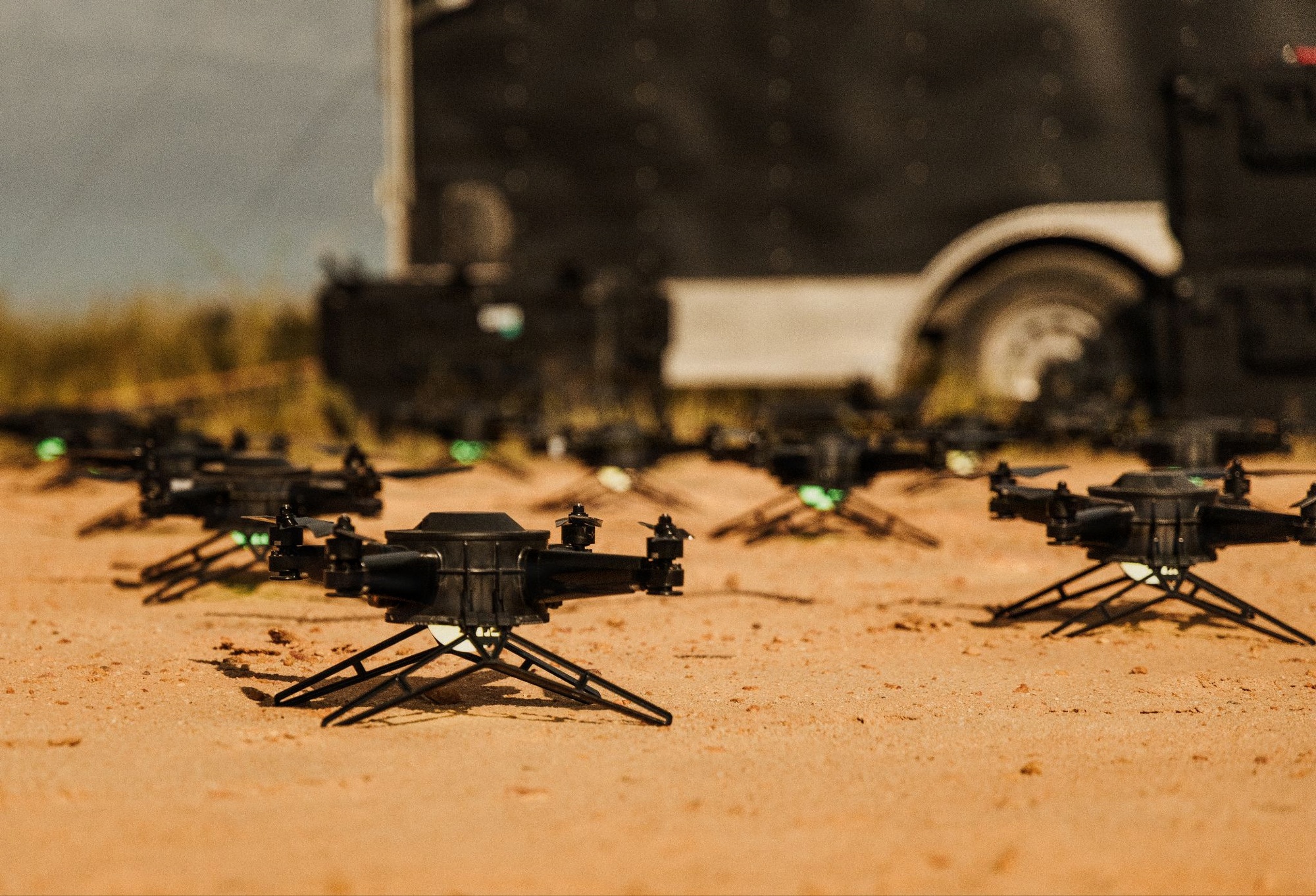
Small UAS staged during the exercise, September 15, 2026. U.S. Army photo by Pfc. Iliana Lopez via DVIDS, public domain. The image is not evidence of a particular system's performance or interception result.
Potential implications and limits
Public reporting establishes that large swarms were used to stress networks, software and crews. It does not provide enough data to validate the combat performance of a particular system. This article therefore does not claim certification, infer an interception rate or equate an exercise scenario with a combat result.
A 100-drone swarm is also one test scale, not a universal threat model. Terrain, weather, electromagnetic conditions, friendly activity and rules of engagement can materially alter how sensors and effectors perform.
This week's discussion
If a counter-UAS network could strengthen only one area first, which would you choose?
- A — More sensor types and coverage
- B — Better shared command-and-control and track fusion
- C — More available effects and fallback options
How would your choice affect the other two?
Sources and image credits
Both photographs are U.S. Army images by Pfc. Iliana Lopez and are marked public domain by DVIDS, subject to the restrictions stated on the DVIDS pages. K.T.Tactical added cover typography without generating or reconstructing an event scene. Use does not imply endorsement by the U.S. Army, DVIDS or the photographer. Sources checked September 23, 2026.


