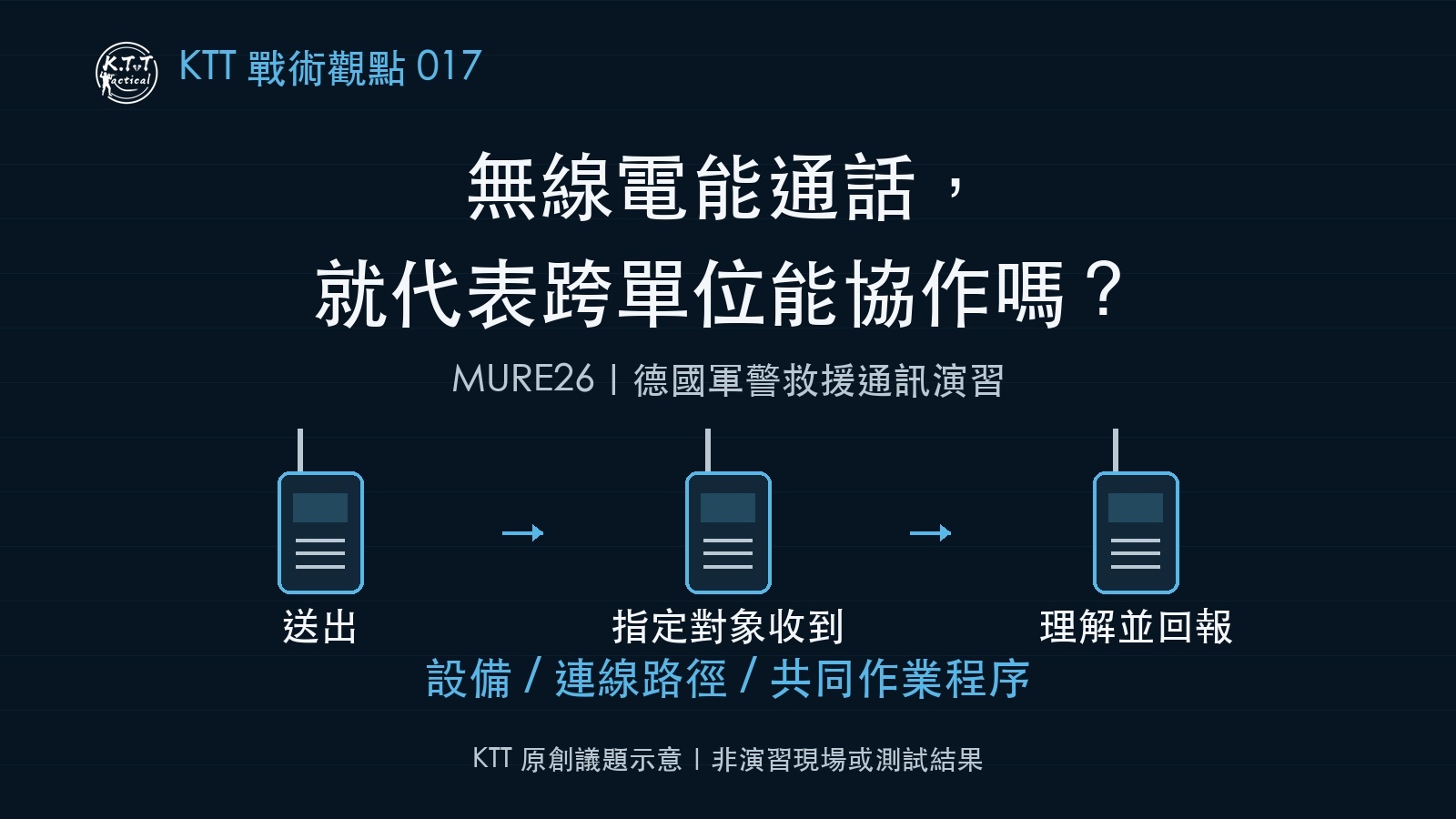
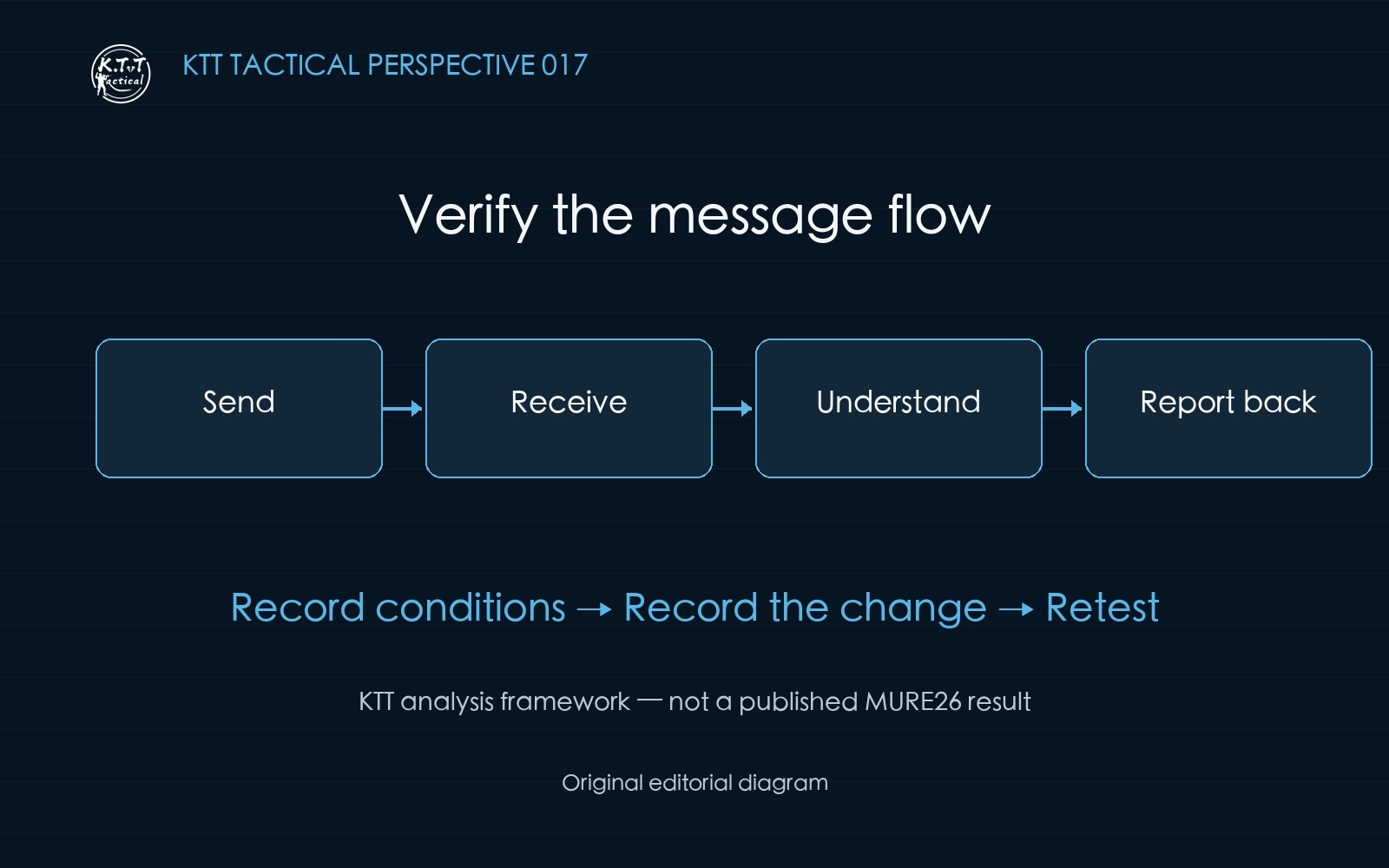
Two organisations can each have working radios and still struggle to communicate during a shared task. The useful test is whether a message reaches its intended recipient, is understood and receives a clear report back.
Confirmed facts: what MURE26 is testing this week
Germany's Federal Police Directorate in Pirna announced MURE26, or Mutuality Reciprocity 2026, for 27–29 October 2026 at the Oberlausitz training area in Saxony. Its stated objectives include existing communications capability, cooperation between organisations and future broadband requirements. [1]
Regional public broadcaster MDR SACHSEN reported on 27 October that the exercise had begun, involving the military, police, fire and rescue services. Its coverage focuses on digital radio and joint communications. [2]
These sources establish the event and its public objectives. At the time of writing, they do not provide comparable call-success, latency or recovery measurements. The official presentation scheduled for 29 October is still ahead. [3]
Context: working equipment answers one part of the question
The following framework is KTT analysis, rather than a published MURE26 finding.
Consider three layers. Equipment concerns whether a device powers up and operates. Connectivity concerns whether the authorised communications path reaches the intended recipient. Shared procedures establish who sends, acknowledges and takes responsibility, and who follows up when no response arrives.
A successful exchange between two radios within one organisation does not, by itself, establish communication with a second organisation or a shared understanding of what happens next. A joint exercise can bring those separate questions into one end-to-end test.
KTT analysis framework, not a published MURE26 result.
KTT perspective: locate the failed step before changing equipment
Distinguish hearing a message from completing its purpose
A non-sensitive exercise message can help check whether the named recipient receives it, understands it and reports back to the correct contact. Testing must follow the participating organisations' rules and authorisation.
For example, a recipient might hear a message but assume another organisation will act on it. That suggests a handover question requiring a different response from a device that cannot transmit. This is a hypothetical example, not a report from MURE26.
Keep the failed-test conditions so that the retest means something
Record the time, participating roles, expected outcome and observed outcome before describing the change. Where practical, evaluate changes separately so their effects are easier to interpret. This is KTT's documentation advice; it is not a claim about the exercise's own method.
Record the scope of a successful retest as well: the conditions, participants and part of the message path covered. That gives the next test a useful starting point.
Implications and limits
MURE26 is a current example of why joint communications deserve evaluation. An announcement of testing does not establish operational performance. Any later results will still need to be read alongside their conditions and scope.
This article does not infer weaknesses in participating systems or provide frequencies, talkgroup, encryption or network settings. The transferable idea is how to verify and document a message flow. Operational communications remain subject to each organisation's procedures.
This week's discussion
In your communications exercises, is the recurring difficulty connectivity, finding the intended recipient or unclear responsibility after receipt? What would you change first, and what result would demonstrate improvement?
Next in the series: turning a failed test and a retest into a comparable exercise record.
Sources checked on 28 October 2026 (Asia/Taipei). Analysis and hypothetical examples are identified separately. Illustrations are original editorial diagrams, not photographs of the exercise.