A friend expects to be back by evening. Night arrives without an update. What can the person waiting at home give responders besides a string of messages? Following our return-power discussion, this review focuses on handing trip information to someone who is not travelling with the group.
Confirmed facts: an overdue return prompted a call for help
In its December 11, 2025 Eldorado Canyon release, the Boulder County Sheriff's Office reported that a climber's family requested assistance after he was several hours overdue. His available headlamp batteries and phone power had been exhausted. [1]
This revisits the historical case used in our previous episode, from the perspective of a trusted contact. It is neither a new incident nor a KTT field visit. The release does not disclose the family's complete trip information, so it cannot establish what they did or did not prepare.
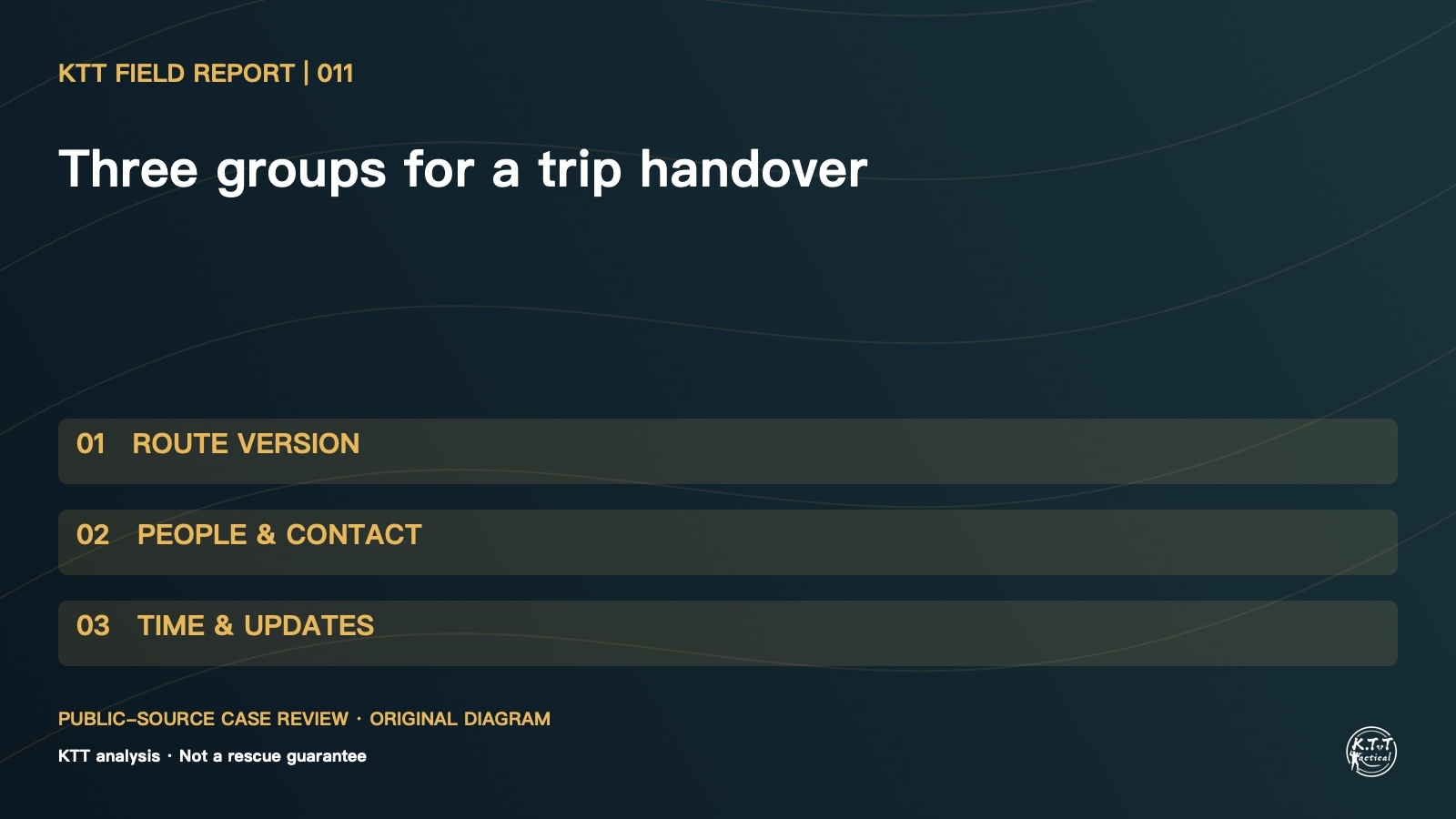
Original KTT information diagram. These three groups are our editorial framework, not documents used by the people in the incident.
Background: leave the plan with someone outside the group
The NPS Trip Planning Guide recommends telling a trusted contact who is not joining the trip where you are going, what you will do and when you expect to return. Changes and completion should also be communicated. [2]Its Trip Plan guidance explains that a plan is not a prerequisite for emergency help and does not guarantee safety or rescue. [3]
KTT Tactical Observation: organise the handover in three groups
The framework below is KTT's information-management suggestion. It is not an official search-and-rescue protocol or a finding about this family. Its purpose is to reduce uncertainty about which information is current.
1. Route: which version describes this trip?
Keep the intended route, access points and discussed alternatives together. Pair place names with recognisable map information instead of relying only on informal shorthand. Mark which section changes when a plan is revised. An intended route should never be presented as a confirmed current location.
2. People and contact: who received the information?
Organise the group members and usable contact methods, then confirm that the trusted contact received a version they can open. Keep personal information needed by responders private; do not invite people to post it in public comments. Receiving a plan does not require the trusted contact to enter hazardous terrain and conduct a search.
3. Time and updates: separate expectations from observations
Record the expected return, the time and substance of the last actual communication, and the latest plan revision separately. Distinct fields for “expected” and “confirmed” help the contact explain what is known and what remains uncertain. Agree on overdue-contact arrangements using guidance for the activity's location. An urgent danger should not be left unreported while waiting for a planned check-in time.
Limits
We do not have the full investigation, private messages or original trip plan, and make no claim about minutes saved in a rescue. NPS guidance concerns US park activities; follow the relevant local authorities and responders elsewhere. Multi-day, technical or large-group trips need more detailed planning. Three information groups cannot replace training.
This week's discussion
Which would you improve before your next trip: A, a clear route version; B, usable contact information; or C, expected return and last-contact times?
Next episode: making a changed route recognisable as the latest plan.