Your headlamp works at the trailhead. How much power will remain for the return? Delays consume the margin available for lighting, navigation and communication. This case review focuses on including the way back in equipment planning.
Confirmed facts
In a December 11, 2025 release, the Boulder County Sheriff's Office reported an overdue climber at Eldorado Canyon whose available headlamp batteries and phone battery were exhausted. After his family raised the alarm, a drone helped locate him and Rocky Mountain Rescue Group assisted with the technical descent. The operation took approximately six hours. [1]
This is a historical case from 2025, reviewed on October 8, 2026. It is not a new incident today.
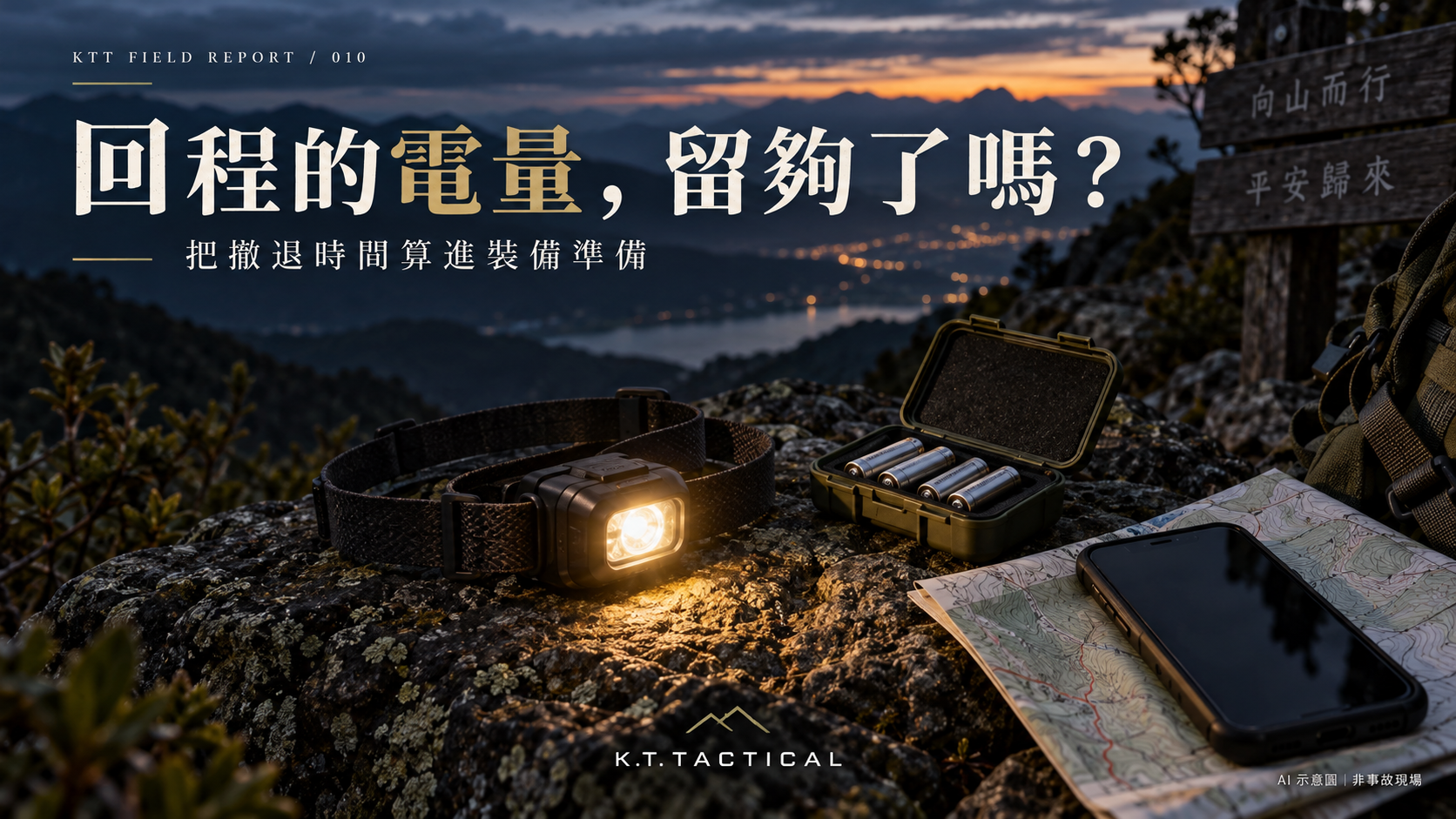
AI-generated editorial illustration, not an incident photograph or a depiction of the climber's actual equipment.
Background: separate lighting from navigation
The National Park Service lists navigation and illumination separately in its Ten Essentials. It recommends a physical backup map, extra phone power, and a headlamp with spare batteries. A headlamp leaves the hands free. [2]
This general preparation guidance does not replace the training, route knowledge or judgment required for technical terrain.
KTT Tactical Observation
1. Define completion as a safe return
The following is KTT's planning analysis, not an official finding of responsibility. A useful power budget separates the approach, main activity, return and possible delays. Counting only the time needed to reach the objective can leave the least margin for the journey out, when illumination may matter most.
2. Check what each backup can actually support
Which devices can the power bank charge? Are the connectors, cables and batteries compatible? Can the spare be reached when needed? Checking these details in a safe setting before departure makes the word “packed” more meaningful. Follow the manufacturer's instructions for charging and battery replacement.
3. Include equipment condition in turnaround decisions
Alongside a planned turnaround time, agree who will call for reassessment when progress slips, lighting becomes inadequate or the route is uncertain. No single battery percentage fits every trip. Remaining distance, weather, team condition and the possibility of waiting for assistance all belong in that decision.
4. Plan beyond being found
In this case, locating the climber still left a technical descent to complete. Trip preparation should consider what happens during an extended wait. Experience on ordinary trails should not be treated as proof of the ability to retreat across technical terrain.
Limits
The release does not identify the headlamp, battery capacity, brightness setting or detailed cause of depletion. It cannot support a brand comparison or a claim that one particular backup would have prevented the rescue. KTT was not at the scene; this is a public-source review, not climbing or technical-descent instruction.
This week's discussion
Which would you improve first? A: a return-and-delay time budget; B: checking that backup power can take over; C: clear turnaround criteria. Share one change you could actually put into practice.
Next episode: three kinds of information a trusted contact needs when a trip runs late.