If two teams share a map, do they necessarily share an understanding of the situation? A common display can still hide differences in data age, source confidence and responsibility.
Our previous issue examined degraded modes and human takeover in autonomous systems. This issue follows that question into the command post: what evidence should a shared information system leave when a person needs to question its picture or take over?
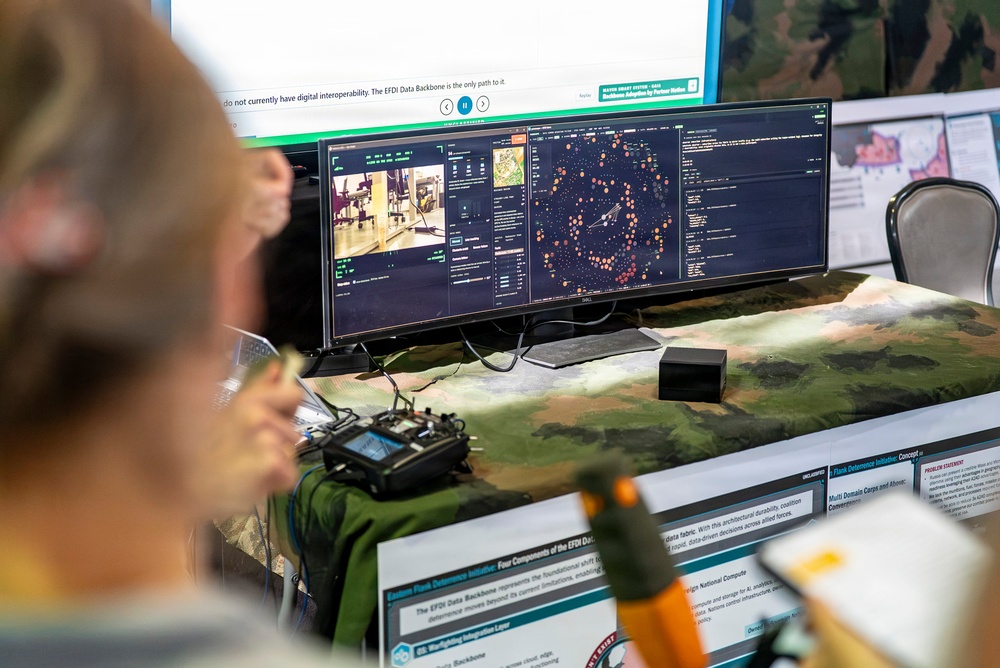
Pre-exercise data-sharing showcase, not a performance result. Photo: U.S. Army / Staff Sgt. Samuel Kim, DVIDS 9972931. The caption says September 29; the Date Taken field says September 28. This source discrepancy is retained. The appearance of U.S. Department of War (DoW) visual information does not imply or constitute DoW endorsement.
Confirmed facts: a current command-post exercise
The U.S. Army's DVIDS feature lists Avenger Triad 26 for October 6–15, 2026, across distributed command posts in France, Germany, the Netherlands and Poland, linked with NATO's Steadfast Duel 26. [1] NATO's Joint Warfare Centre reported on October 6 that Steadfast Duel had begun as a computer-assisted command-post exercise. [2] Independent dpa reporting, published by Daily Finland on September 30, corroborates Avenger Triad's dates and simulation-based format. [3]
The announcement dates and exercise dates are distinct. These sources describe an exercise and its aims; they do not establish the performance of every participating system.
Context: shared data still needs interpretation
A refresh indicator is easy to see. The age of an individual observation may be less obvious. An observation can have a collection time, a reception time and a display-update time. Treating these as interchangeable risks making old information appear current.
For teams assessing an interface, the useful question is how clearly it exposes these distinctions. Faster display updates can help, but update speed alone does not tell the next operator what remains uncertain.
KTT perspective: three evidence trails for human handover
The following is our proposed assessment framework. It is not a claim that these exercises have adopted or passed these checks.
1. Make age and uncertainty visible
Record source and reception times separately. Check whether information becomes visibly stale when a source stops updating. If reports conflict, preserve that disagreement instead of presenting an unexplained single answer. A new operator should be able to distinguish established information from an unresolved interpretation.
2. Separate an alert from understanding
An alert being generated does not establish that it was noticed or understood. A useful record distinguishes notification, acknowledgement and the person's explanation of what is affected. During a busy handover, important messages may compete with routine prompts; counting notifications says little about whether the right information reached the person.
3. Close the handover
A request to transfer control is one step. The record should also show who accepted responsibility, what limitations they understood, when transfer was confirmed and who owns unfinished work. This makes later review less dependent on memory.
Implications and limits
These questions also matter in emergency coordination, outdoor team tracking and everyday operational handovers. Shared access to information is useful only when people can assess its age, recognise unresolved issues and identify responsibility.
The cited public material does not provide a complete dataset of error rates, alert comprehension or takeover-time distributions for this framework. Participation, exercise scale and a demonstration cannot establish all-condition reliability or a specific operational outcome. A multinational command-post exercise is also not a certification of a civilian product.
A question for your next handover
What would you check first: the timestamp, conflicting sources or the person accepting responsibility? Our next issue will use a simple handover example to separate “received” from “understood.”
No related products are included because the topic has no substantiated direct connection to a particular product.
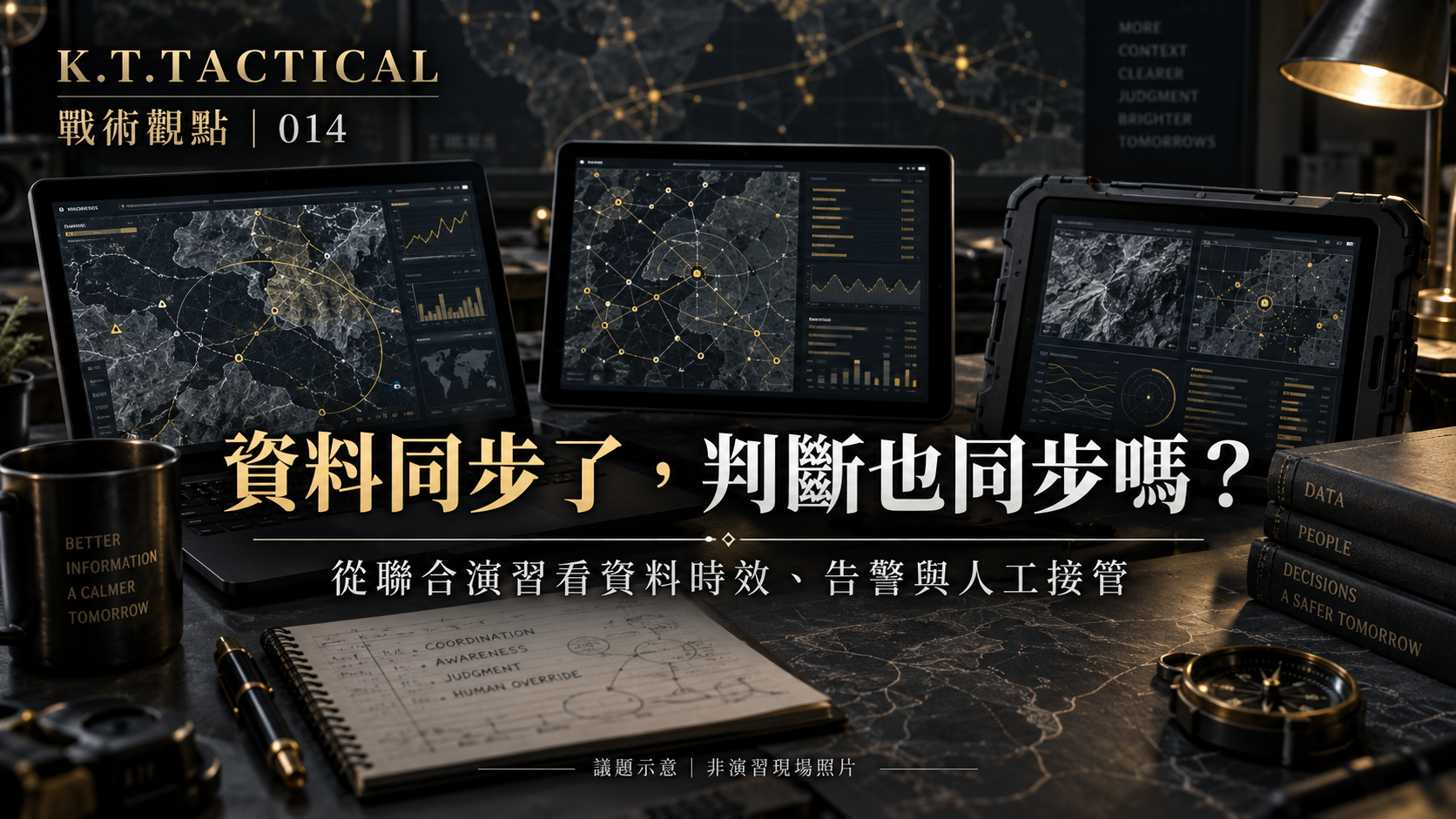
The cover is an AI-generated issue illustration, not an exercise photograph. The documentary image is attributed in its caption and used for news context, without suggesting official endorsement of K.T.Tactical. Sources checked October 8, 2026, Asia/Taipei. This is the delayed October 7 Wednesday edition.