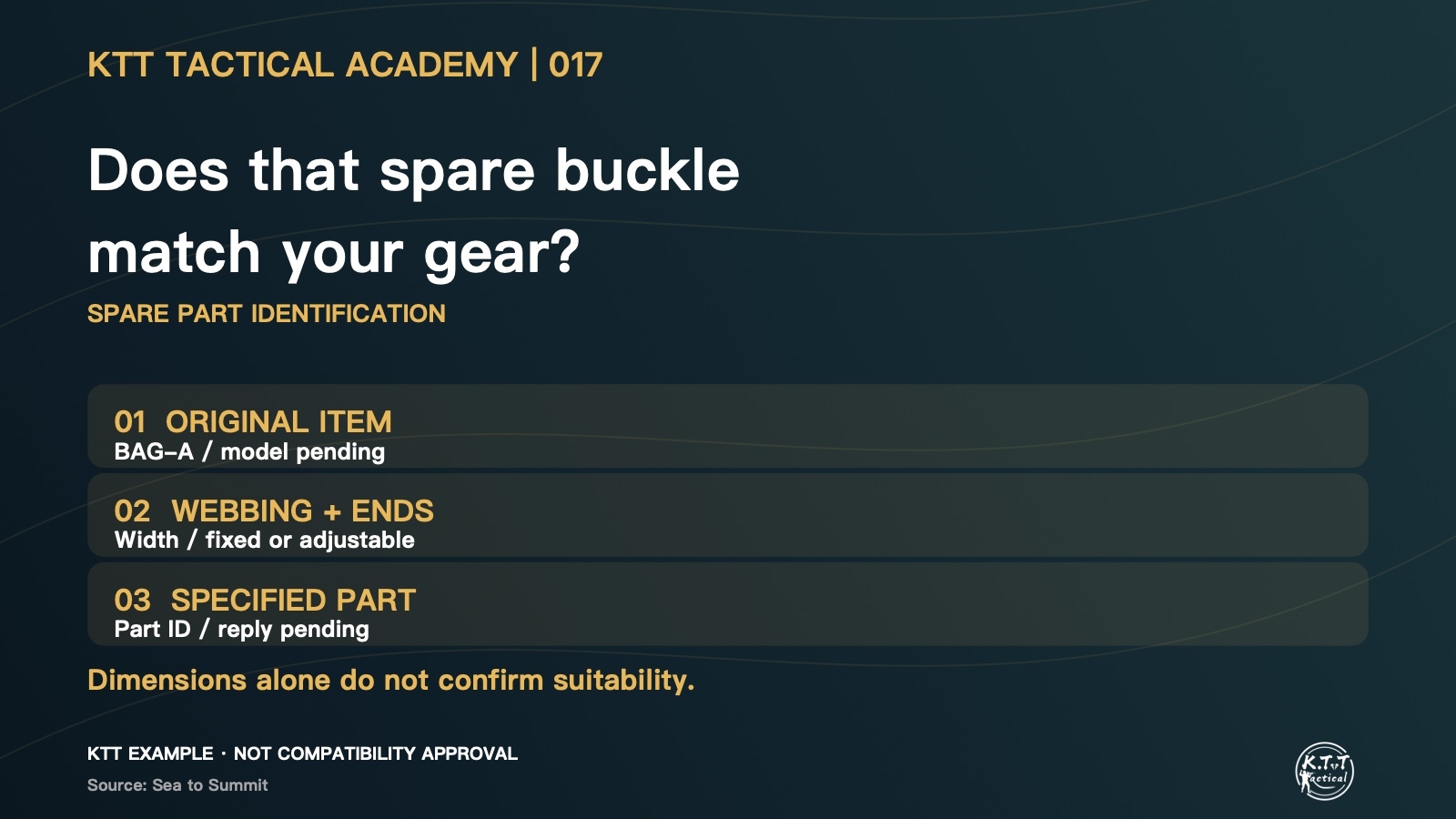
Fictional KTT example, not a product photograph, manufacturer form or compatibility approval.
A spare marked “25mm” needs an original item
A buckle has broken on a backpack, and a similar-looking spare is in the parts bag. Before selecting a replacement, bring the original item and spare-part information together: the full model, affected location, webbing width, attachment arrangement and any part identification on the packaging.
Academy016 covered maintenance records. This instalment connects a spare to the item it was intended for, so a manufacturer enquiry starts with identifiable equipment.
Attachment arrangements differ within a range
Sea to Summit Australia explains that buckle sizing refers to webbing width. Its two-pin version is a non-adjustable replacement; the one-pin version combines a fixed end with an adjustable ladderlock. The UK page also describes a threaded version with ladderlocks at both ends.
These distinctions belong to the cited range. For another product, confirm its specified replacement. KTT’s practical conclusion is that matching dimensions, a similar appearance or two halves clicking together does not by itself establish suitability for the original item.
Prepare four groups of information
1. Identify the original item
Keep the full brand, model and identifiable version. Photograph an unreadable label and mark the missing information as unresolved. Give two otherwise identical backpacks separate item references.
2. Show the affected location
Keep an overall view that locates the part, plus close-ups of both ends and any markings. Show how the original buckle connects to the webbing, rather than retaining only an isolated close-up.
3. Identify the spare
Save its packaging, part number, marked size and official product page. Keep webbing width separate from the buckle’s outer width. If a measurement or attachment arrangement is unclear, preserve the question instead of guessing.
4. Keep the manufacturer’s answer
Ask for the specified replacement name or part number, applicable version and whether a complete assembly is required. Retain the reply date and its conditions. Buying a spare does not close an unanswered compatibility question.
A fictional parts-bag record
KTT example: item BAG-A; original model still needed; backpack waist-belt buckle; spare marked 25mm; attachment arrangement unresolved. Next action: add label and location photographs, then ask the manufacturer for the specified part. This is an original enquiry aid, not a manufacturer form or a confirmed replacement match.
Identification records do not replace installation instructions, inspection or a safety decision. Follow the relevant manufacturer procedure for load-bearing, protective or other critical equipment. This article does not provide repair instructions or approval for mixing buckle components.
Next in the series
After the replacement arrives: separate manufacturer confirmation, completed replacement work and questions that remain open.