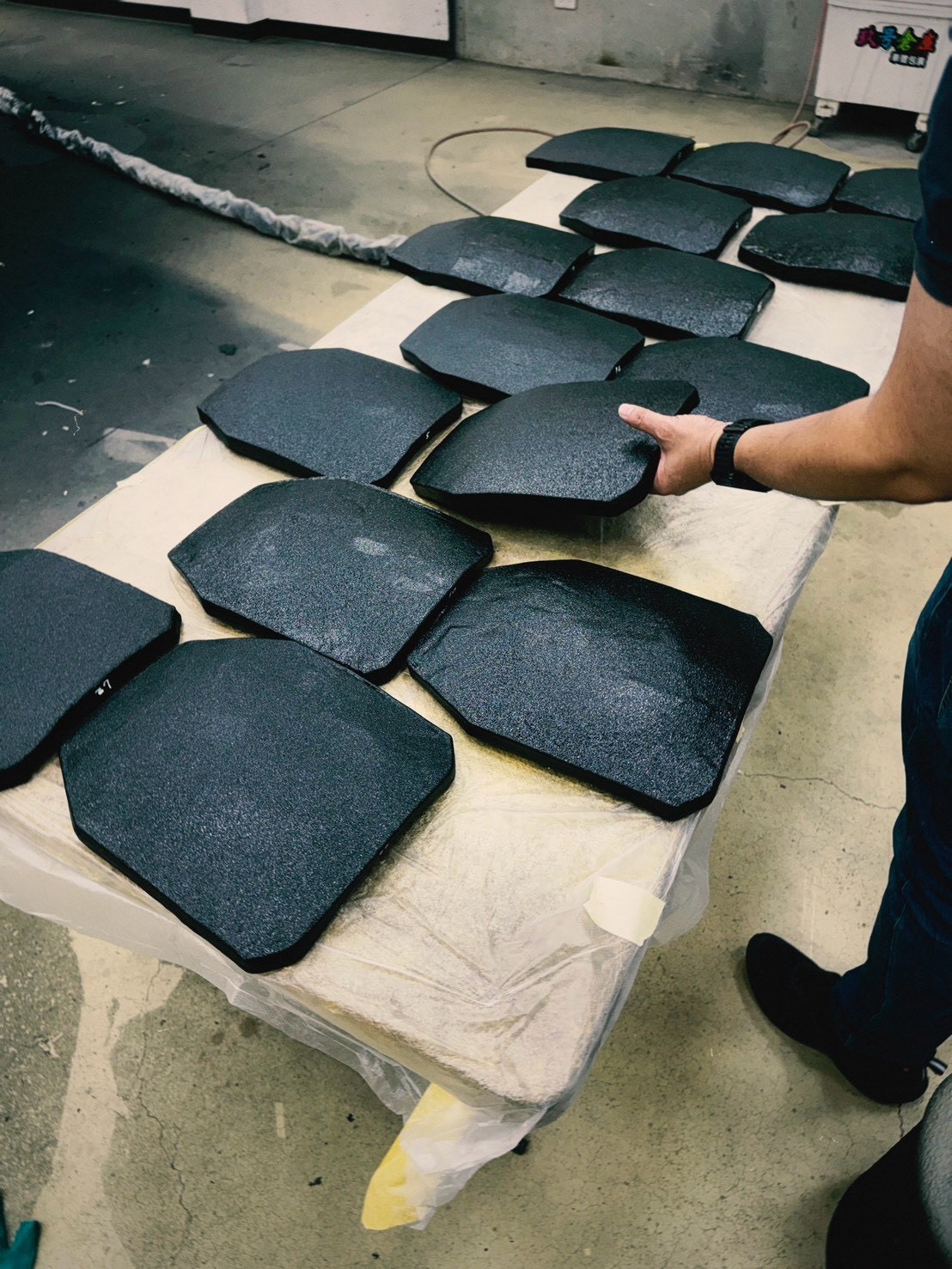
A ballistic plate needs careful weight management as well as consideration of how it behaves under impact.
KTT’s NOVARA RF2, currently in development, combines Japanese TOYOBO materials, HCG silicon carbide ceramic and a LINE-X protective coating. From the internal materials to the external application, every stage remains part of our ongoing validation.
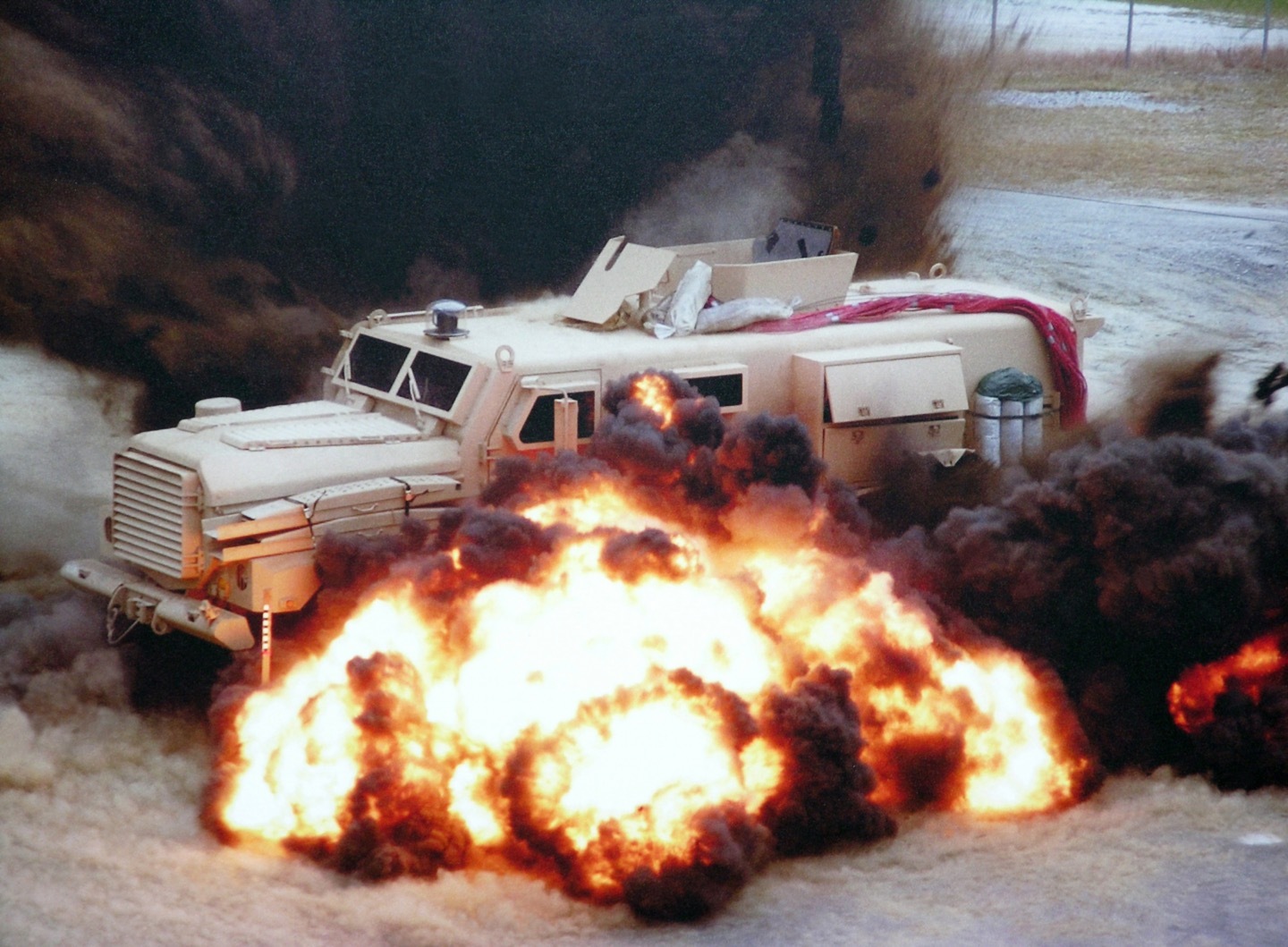
Beyond resistance to handling, friction and everyday wear, we value LINE-X’s application experience in blast mitigation and fragment control.
Here are several real-world examples that help explain the brand.
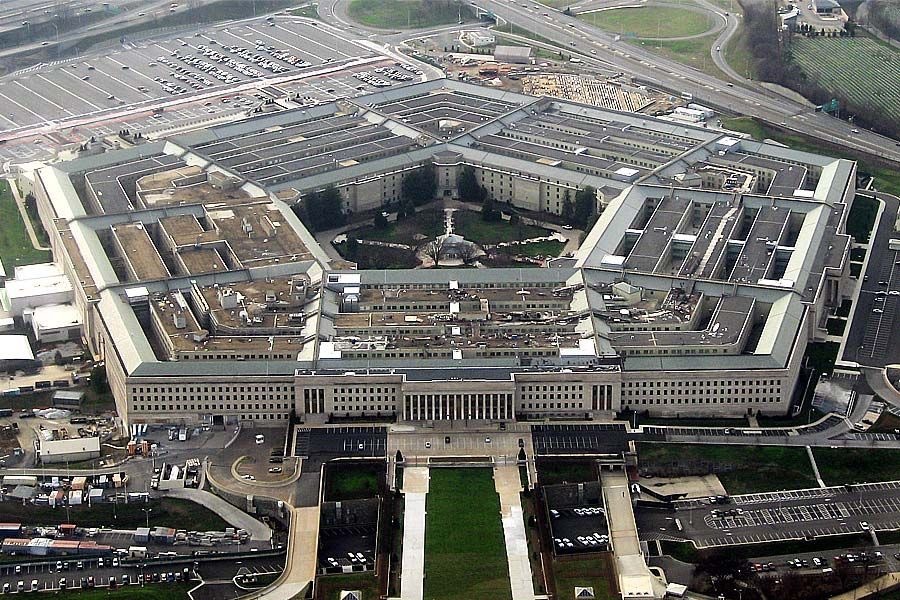
Protection at the Pentagon
LINE-X protective coatings have been used in blast-mitigation applications at the Pentagon.
For critical buildings, fragments and structural breakup caused by an explosion are threats that also require attention. Protective coatings can play a role in reducing breakup and flying debris, forming part of LINE-X’s background in defense-facility protection.
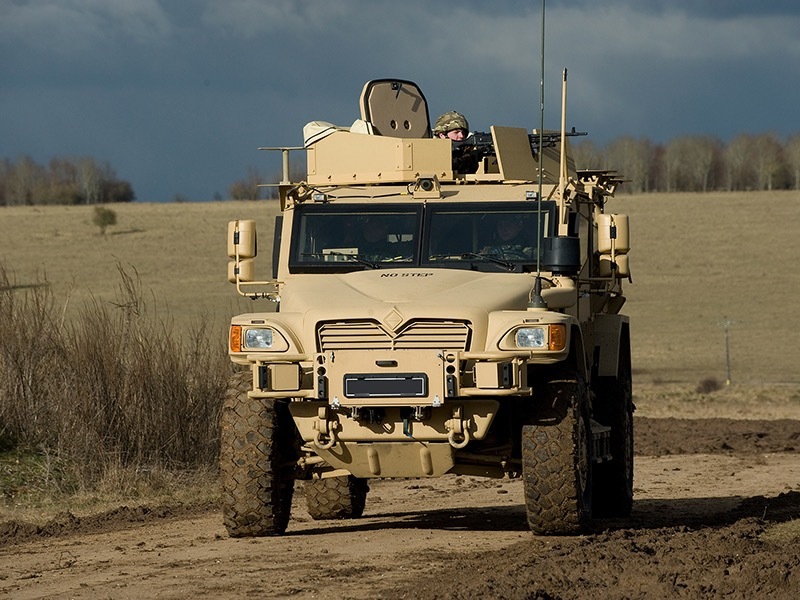
Military support equipment needs protection, too
Defense equipment is tested during transport, field work and maintenance as well as in other demanding conditions.
One example is the use of a LINE-X polyurea coating on a Growler military mobile welding trailer. Such support equipment must keep working in harsh environments, making surface protection and durability important design considerations.
Critical facilities and military support equipment have different uses, each requiring appropriate coating configurations and validation.
Engineering work after Fukushima
Public Japanese construction records list several uses of LINE-X at Fukushima Daiichi, including sealing and waterproofing openings in the Unit 4 turbine building and durable waterproofing work for ALPS-related buildings.
These records describe sealing, waterproofing and facility-protection applications after the nuclear disaster, showing another role for protective coatings in major post-disaster engineering work.
Why KTT’s RF2 uses LINE-X
For ballistic plates, weight and protective performance need to be considered together.
In KTT RF2 development, our goals for this coating are to help maintain plate integrity after impact, reduce outward dispersion of ceramic fragments and assess its effect on post-impact indentation, while keeping added weight under control.
These are objectives guiding our material selection and finished-product validation. LINE-X’s experience in blast mitigation and fragment control informs our selection; KTT RF2’s actual performance must be established through testing of our own complete plates.
Back to the workshop in Taiwan
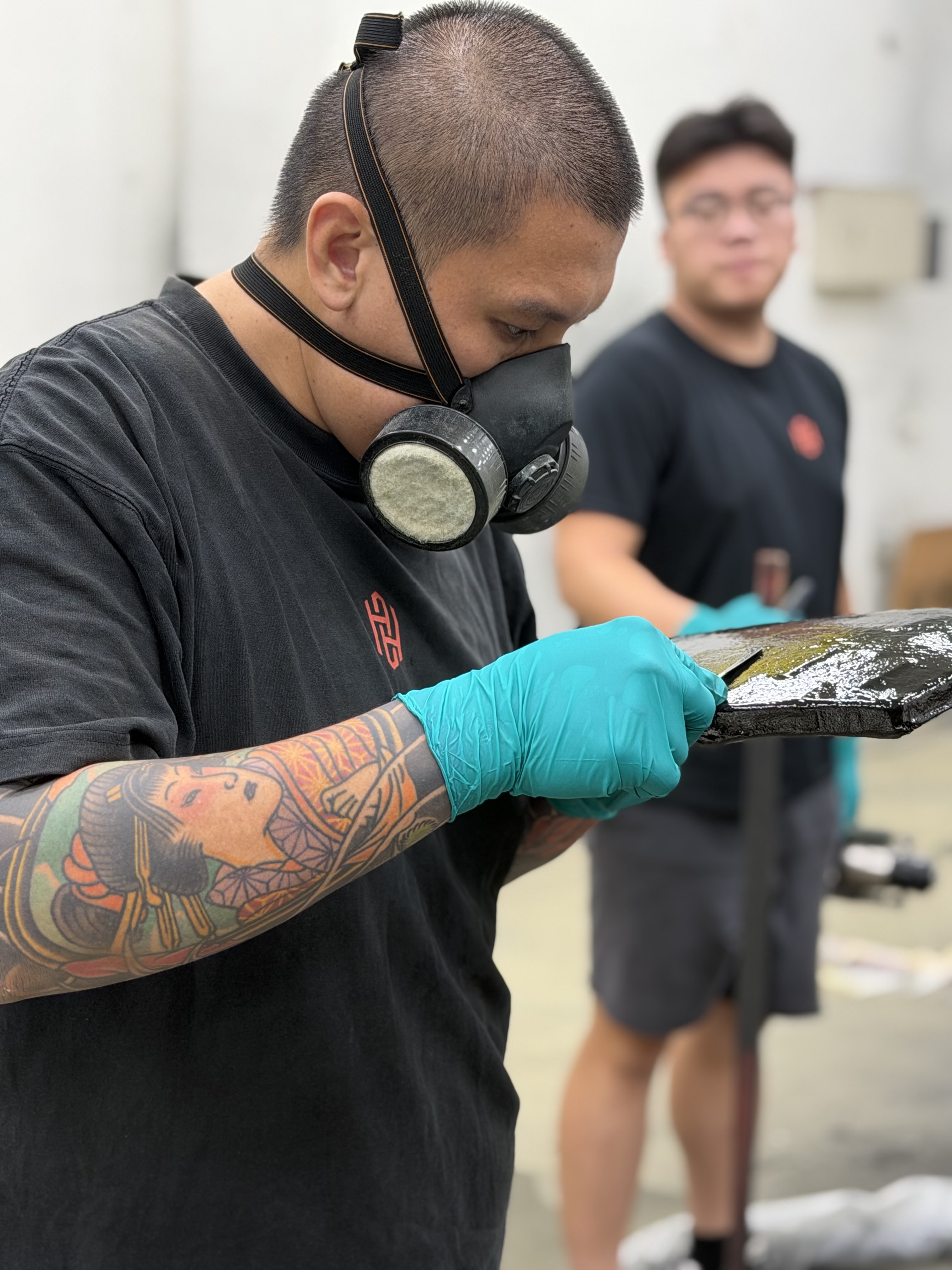
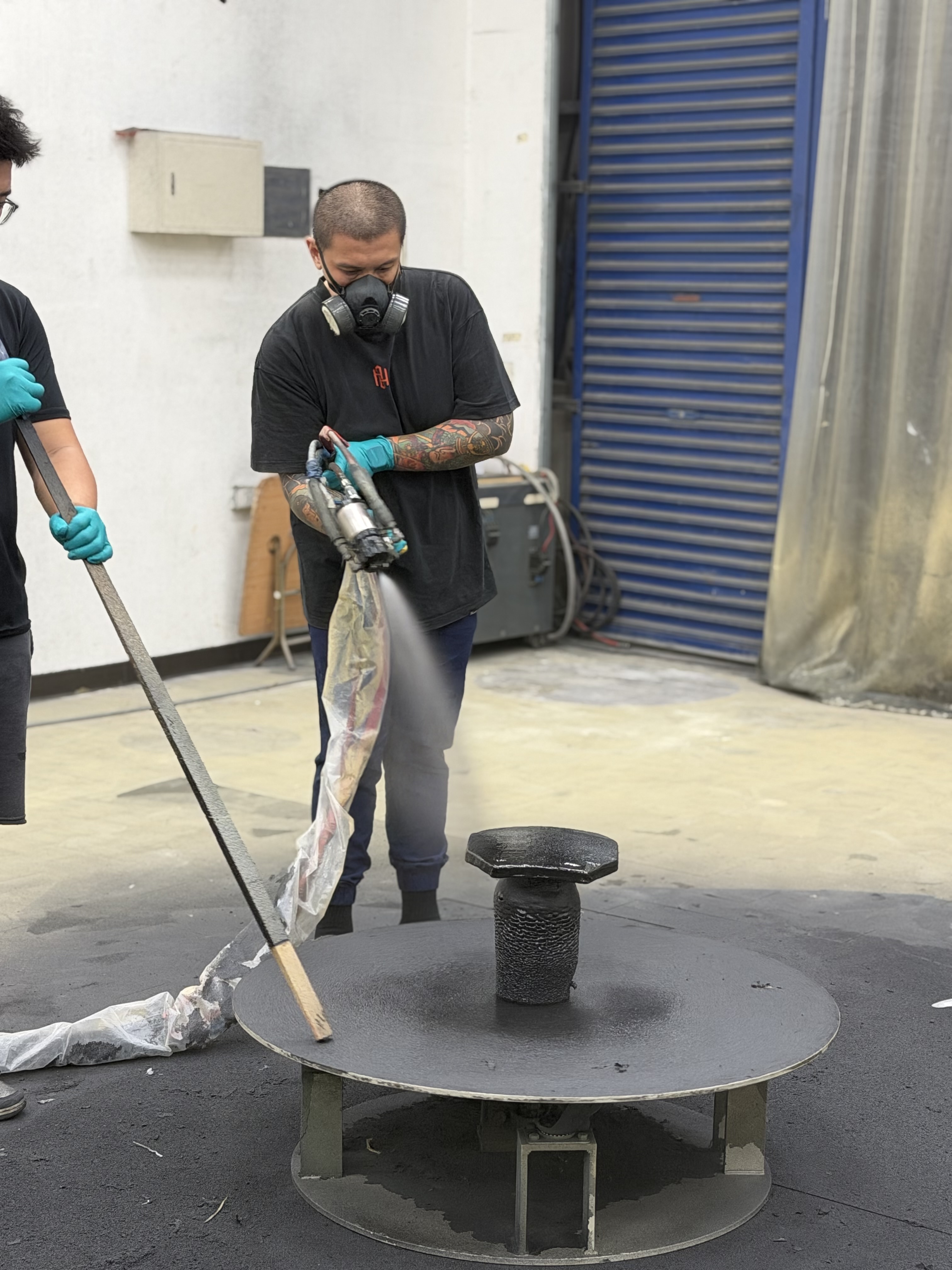
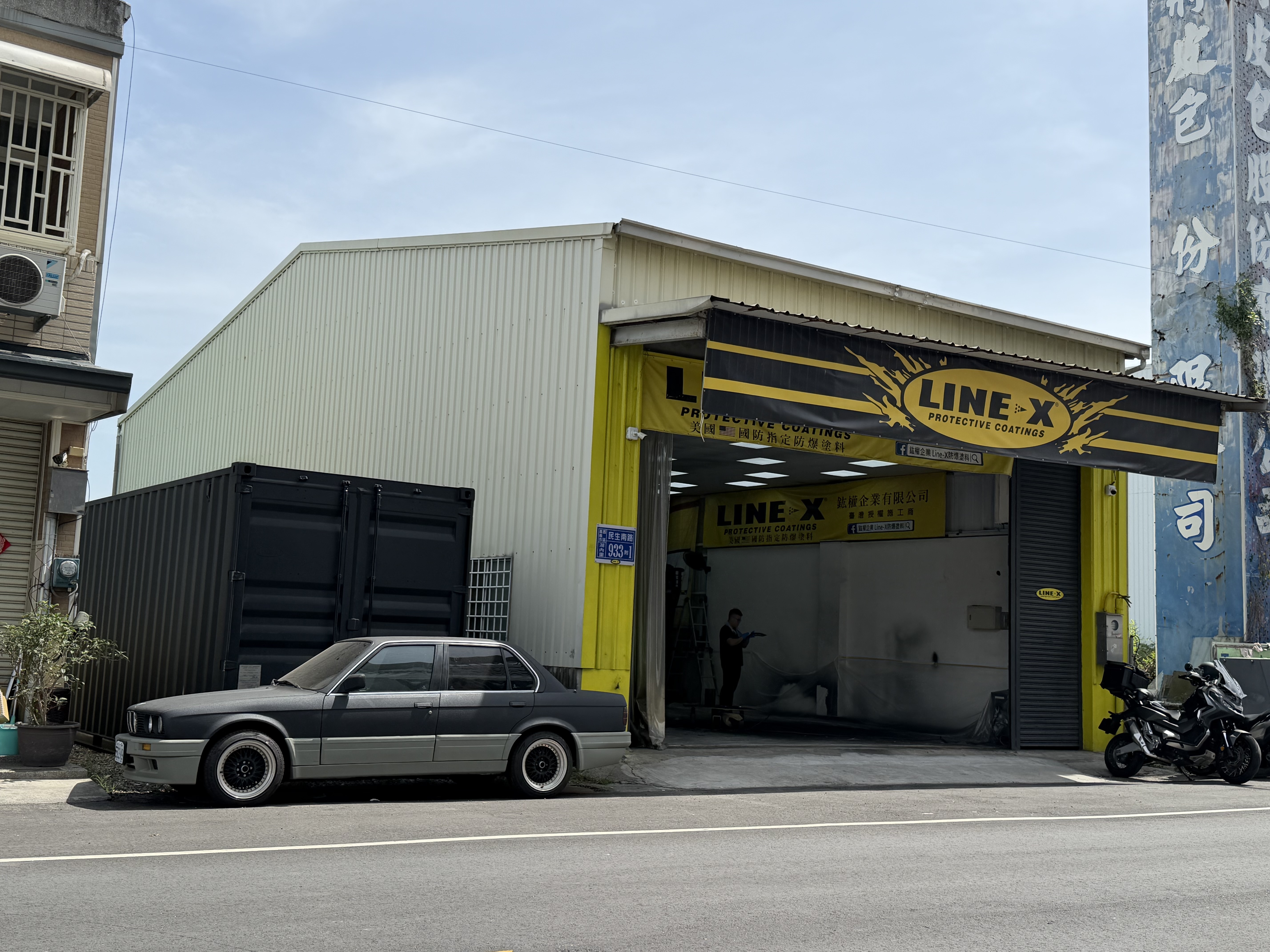
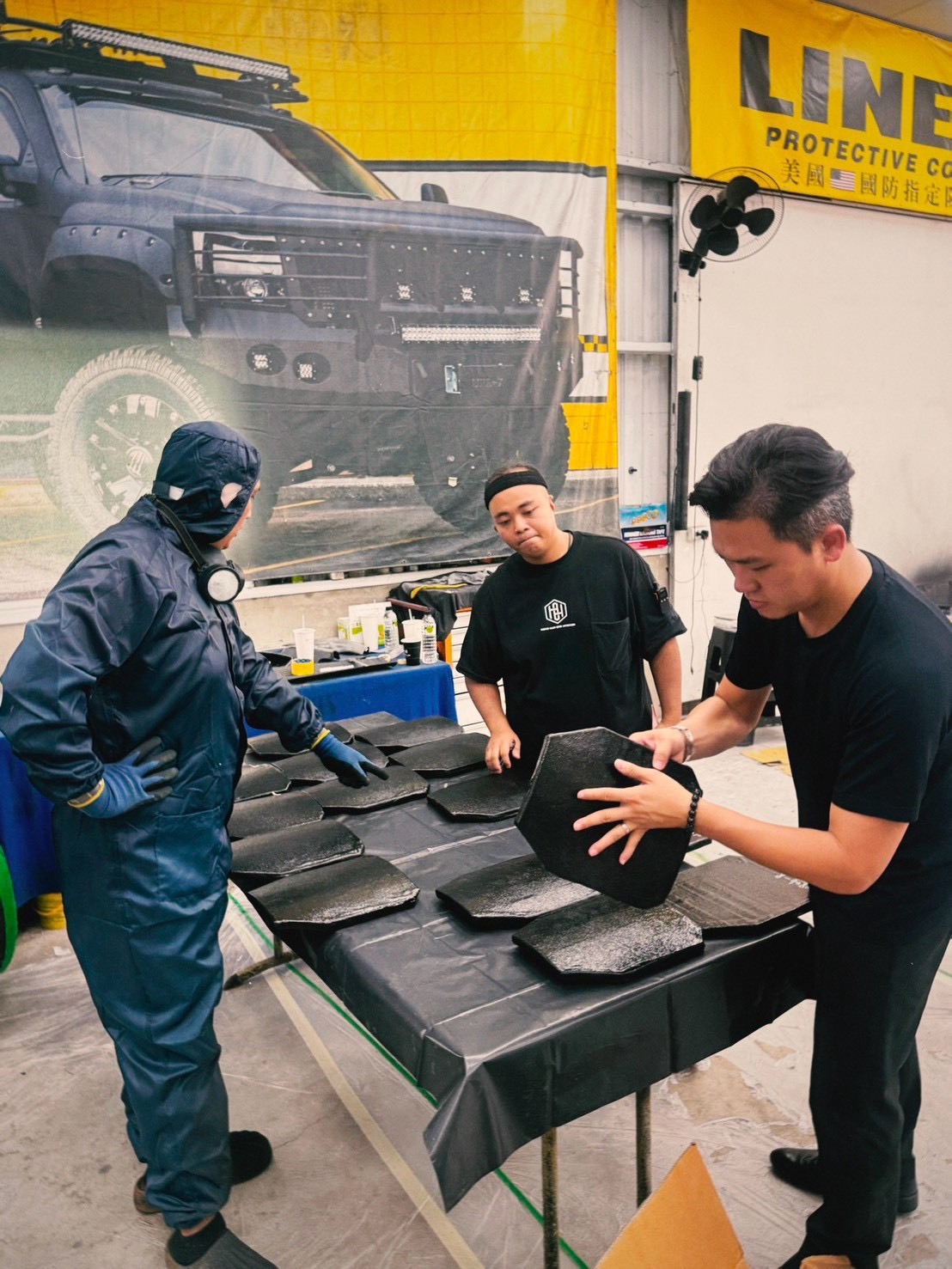
KTT’s plate coating is applied in cooperation with Shunquan Enterprise in Chiayi.
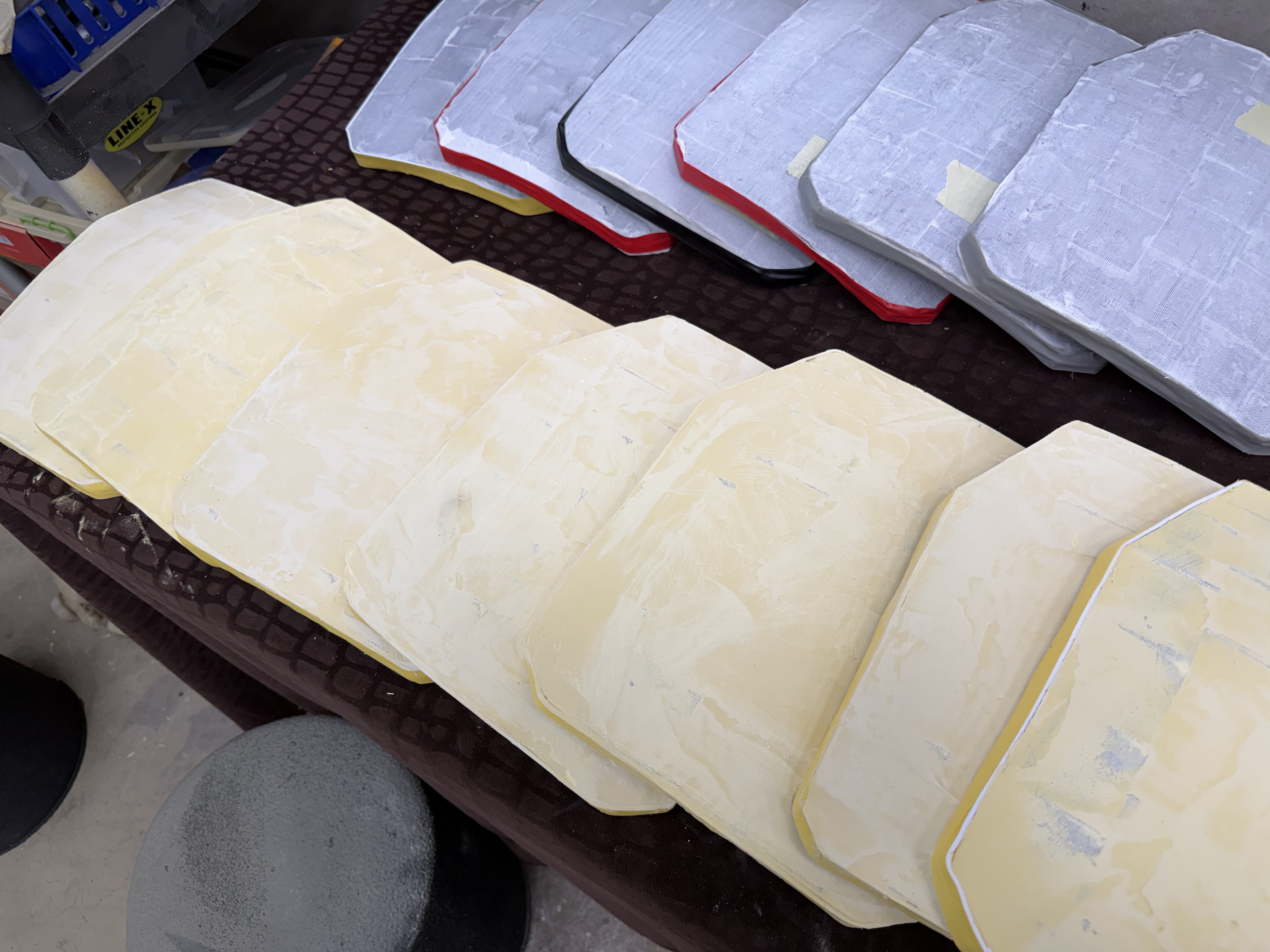
These workshop photographs document Mr. Lin and his team handling and spraying the plates. Every application detail, from the plate surfaces to the edges, is part of the finished product.
Materials need appropriate application to achieve their intended role in a product. This is why we value our partner’s experience.
Validating weight, protection and durability together
Japanese TOYOBO materials, HCG silicon carbide ceramic and the LINE-X protective coating applied by Shunquan each serve different roles.
KTT aims to bring weight, protection and durability together, making the outer coating a carefully validated part of the complete protective design.
NOVARA RF2 remains under development and validation. We will continue sharing material choices, application processes and testing progress, showing how a Taiwan-made ballistic plate moves toward completion.